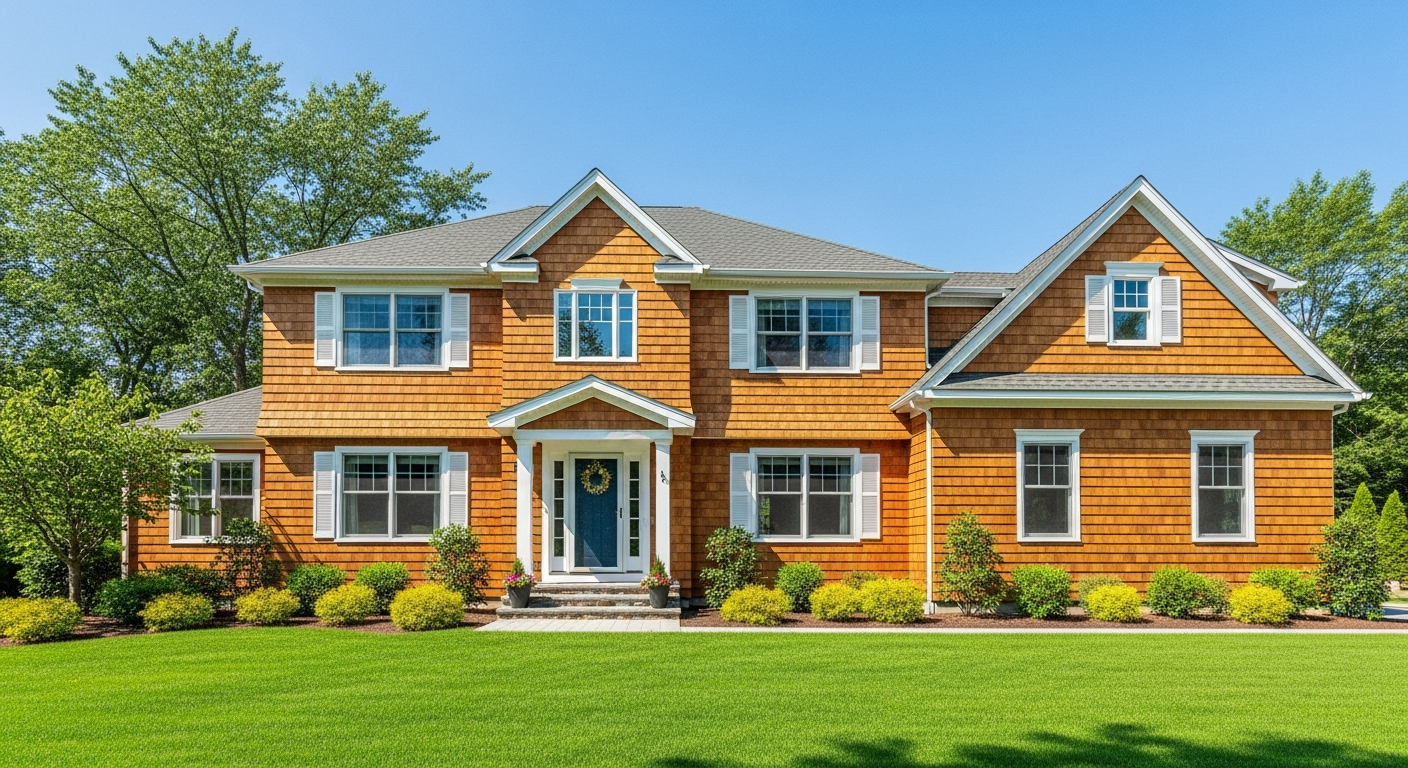
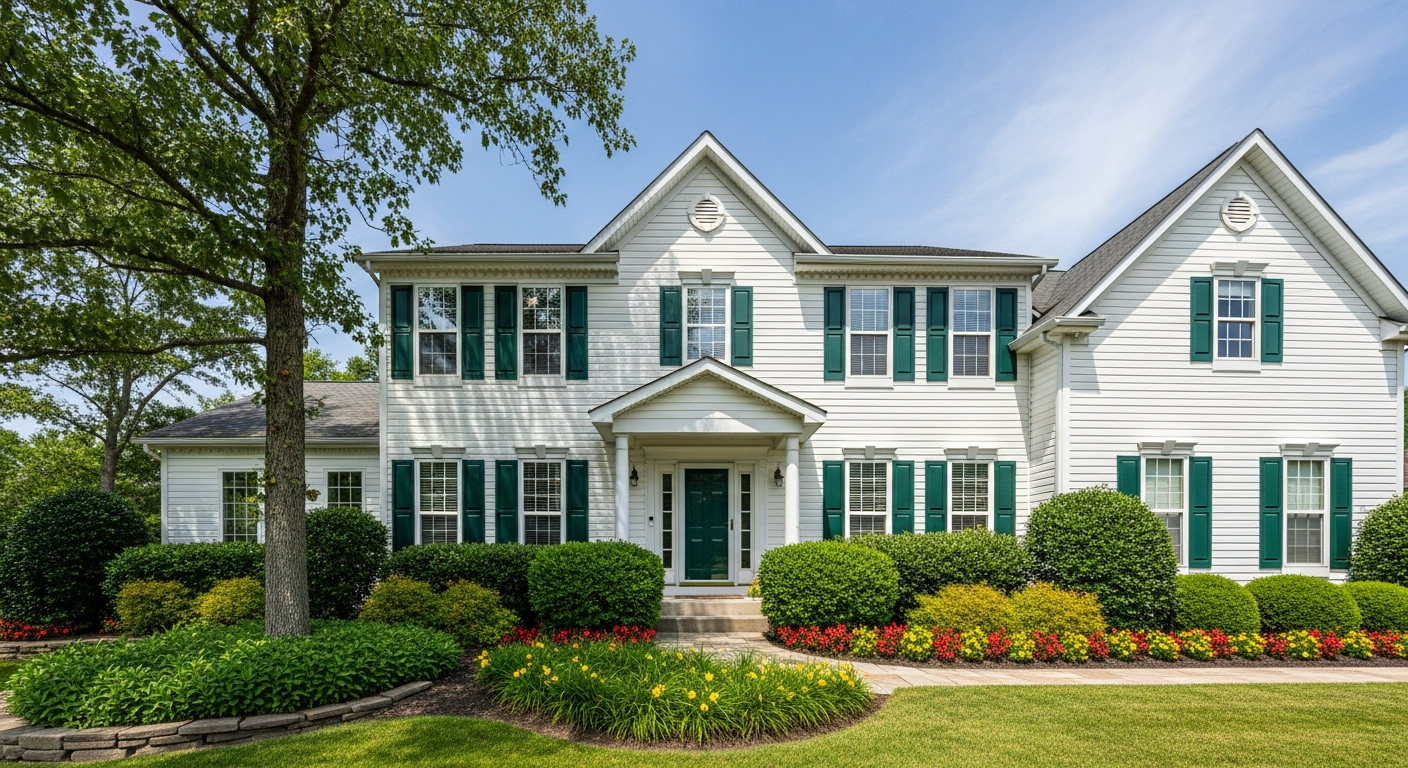
Drag the slider to compare Vinyl vs Wood siding appearance
Vinyl Siding vs Wood Siding: Side-by-Side Comparison
Here is the full comparison before we get into the details. This table covers every factor that matters when you're choosing between vinyl siding and wood siding for your home's exterior:
| Factor | Vinyl Siding | Wood Siding |
|---|---|---|
| Material | Polyvinyl chloride (PVC) | Natural wood — cedar, pine, redwood, fir |
| Cost per square foot installed | $3.50–$7.00 | $5.00–$12.00 |
| 2,000 sqft home cost | $7,000–$14,000 | $10,000–$24,000 |
| Lifespan | 20–40 years | 20–40+ years (with upkeep) |
| Maintenance | Rinse occasionally; no painting | Paint or stain every 3–7 years |
| Appearance | Molded wood-look texture | Authentic real wood grain |
| Rot & insect resistance | Immune — won't rot | Vulnerable — rot, termites, mold |
| Behavior in heat | Can warp or melt | Can warp, cup, or split |
| Fire rating | Combustible | Combustible |
| R-value (insulation) | ~0.61 standard; ~2–3 insulated | ~1.0–1.4 (natural insulator) |
| Environmental | Plastic — not biodegradable | Renewable & biodegradable |
| Curb appeal | Good — improving textures | Premium — natural beauty |
| Resale ROI | ~75–80% | ~50–75% |
| Best for | Budget, low maintenance, wet climates | Authentic beauty, farmhouse/historic, dry climates |
Source: NAHB Construction Cost Reports, Remodeling Magazine Cost vs. Value Report, USDA Forest Products Lab, BLS.
Cost Comparison: Vinyl vs Wood Siding Cost
On upfront cost, vinyl siding wins clearly. Vinyl siding costs $3.50–$7.00 per square foot installed, putting a typical 2,000-square-foot home at $7,000–$14,000. Wood siding ranges from $5.00–$12.00 per square foot depending on the species and profile — pine and fir at the low end, cedar and redwood at the premium end — for a total of $10,000–$24,000 on the same home. On average, wood siding costs 40–70% more than vinyl to install.
The cost per square foot is only the starting point, because wood carries a maintenance bill that vinyl does not. Wood siding needs to be repainted or restained every 3–7 years at roughly $1.50–$3.00 per square foot, while vinyl siding needs nothing beyond an occasional cleaning. Over the life of the siding, that recurring expense reshapes the comparison — which is why a 30-year cost-of-ownership view matters more than the installation quote alone.
| Home Size | Vinyl Siding (Installed) | Wood Siding (Installed) |
|---|---|---|
| 1,500 sqft | $5,250–$10,500 | $7,500–$18,000 |
| 2,000 sqft | $7,000–$14,000 | $10,000–$24,000 |
| 2,500 sqft | $8,750–$17,500 | $12,500–$30,000 |
| 3,000 sqft | $10,500–$21,000 | $15,000–$36,000 |
Installed cost only. Use our vinyl siding cost and wood siding cost calculators for state-specific pricing.
Cost of Ownership: Vinyl vs Wood Siding Over 30 Years
This is where the two materials separate. Wood siding's painting or staining cycle is a recurring cost that compounds over the decades, while vinyl's maintenance is close to zero. Here is what each costs to own over 30 years on a typical 2,000-square-foot home:
| Line Item (2,000 sqft home) | Vinyl Siding | Wood Siding |
|---|---|---|
| Upfront installation | ~$10,000 | ~$17,000 |
| Paint or stain over 30 years | $0 | ~$18,000 |
| Cleaning & minor upkeep | ~$500 | ~$1,500 |
| 30-year total spend | ~$10,500 | ~$36,500 |
| Lifespan with upkeep | 20–40 years | 20–40+ years |
| Resale recovery on install | ~75–80% | ~50–75% |
Illustrative example using national-average costs. Actual figures vary by wood species, climate, and home complexity.
The gap is dramatic: roughly $10,500 to own vinyl siding over 30 years versus about $36,500 for wood — and unlike some siding comparisons, this gap widens over time rather than narrowing, because wood's paint-or-stain cycle never stops. That doesn't make wood the wrong choice. It means wood siding is a decision driven by beauty, authenticity, and sustainability rather than economy. If those qualities matter to you, the ongoing maintenance is the price of admission; if they don't, vinyl is hard to beat on cost.
What Is Wood Siding? Natural Beauty and Real Wood Grain
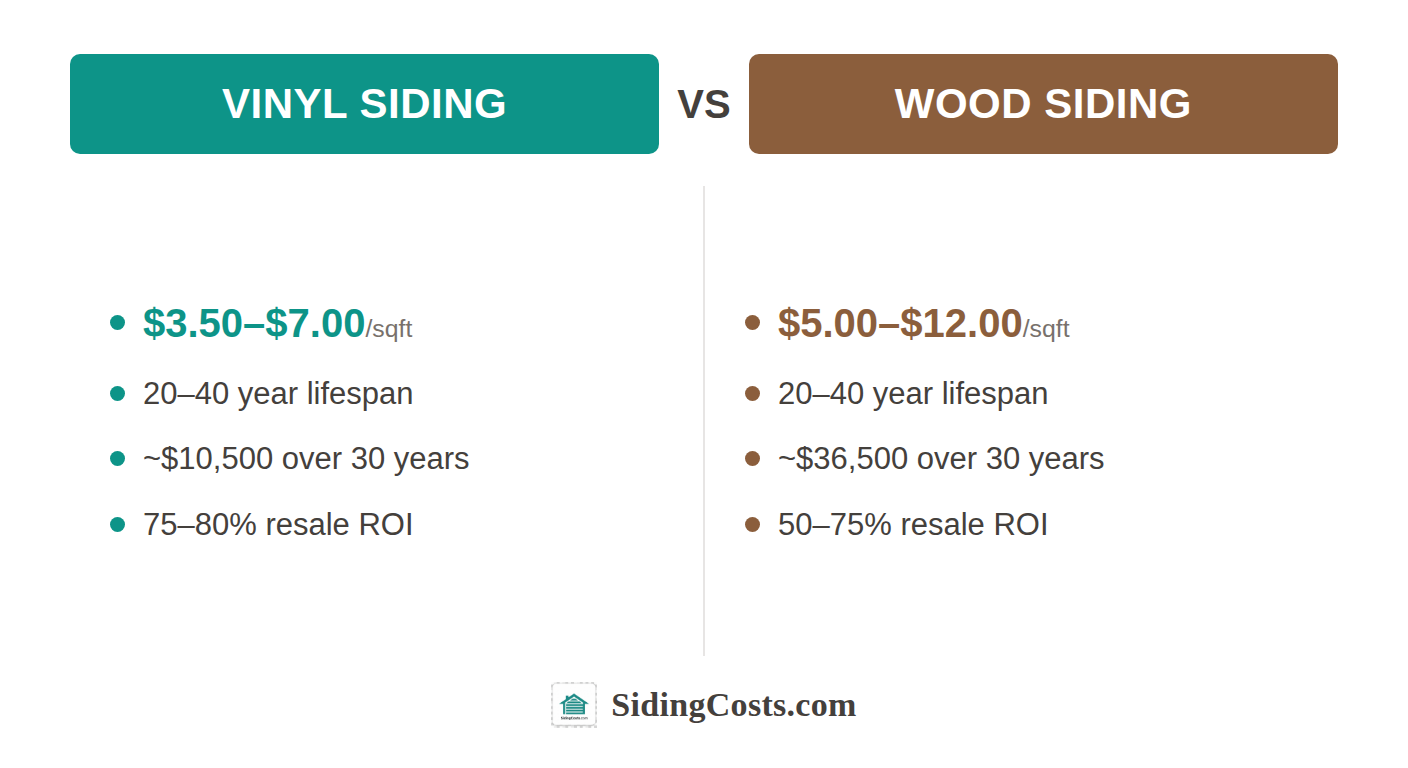
Vinyl siding vs wood siding: key cost and performance metrics compared. Source: NAHB, Remodeling Magazine, USDA Forest Products Lab.
Wood siding is the original exterior cladding — real wood milled into lap siding, shingles, shakes, or board and batten profiles. The most common species are western red cedar and redwood (premium, naturally rot- and insect-resistant), and pine, spruce, and fir (more affordable, but more dependent on paint for protection). Wood's defining advantage is authenticity: the depth, variation, and warmth of real wood grain cannot be fully matched by any molded product. It suits farmhouse, craftsman, and historic façades where a natural look is the whole point.
Wood is also a natural insulator and a renewable, biodegradable resource — points in its favor for homeowners who prioritize sustainability. The tradeoff is upkeep. Wood siding needs regular painting or staining to protect your home from moisture, and without it the material is vulnerable to wood rot, termites, mold, and ultraviolet weathering. Left unfinished, cedar weathers to a silver-gray patina that some owners love and others consider neglect. Cared for, real wood siding can last 40 years or well beyond.
What Is Vinyl Siding? The Low-Maintenance Standard
Vinyl siding is the most popular siding material in the United States because it is inexpensive, durable, and nearly maintenance-free. Vinyl siding is made from polyvinyl chloride (PVC), the same rigid plastic used in pipes and window frames. It is colored all the way through, so scratches don't show, and it never needs painting — a rinse with a garden hose is the entire routine. It won't rot, and termites and insects ignore it.
Modern vinyl has improved markedly on looks: manufacturers offer deeper textures, richer colors, and lap siding and board and batten profiles that mimic the look of painted wood. Insulated vinyl siding adds a foam backing that lifts the R-value to roughly 2–3 and improves energy efficiency. Vinyl's weaknesses are heat and impact: because it is a thermoplastic, it can warp or even melt under intense heat, and it can grow brittle and crack in extreme cold. Up close, the lowest-cost vinyl can still read as plastic next to real wood.
Wood Siding Pros and Cons
Wood Siding Pros
- ✓ Authentic real wood grain — unmatched natural beauty
- ✓ Renewable and biodegradable — eco-friendly
- ✓ Natural insulator — higher R-value than standard vinyl
- ✓ Can be refinished and repaired indefinitely
- ✓ Ideal for farmhouse, craftsman, and historic homes
- ✓ Multiple profiles — lap, shingle, shake, board and batten
- ✓ Adds premium curb appeal when well maintained
Wood Siding Cons
- ✗ Requires paint or stain every 3–7 years
- ✗ 30-year maintenance can add $15,000–$20,000
- ✗ Vulnerable to wood rot, termites, and mold
- ✗ Can warp, cup, or split in sun and moisture
- ✗ Higher upfront cost than vinyl
- ✗ Combustible without fire-retardant treatment
- ✗ Less predictable resale ROI (50–75%)
Vinyl Siding Pros and Cons
Vinyl Siding Pros
- ✓ Lowest upfront cost of any durable siding
- ✓ Virtually no maintenance — no painting, ever
- ✓ Won't rot; immune to termites and insects
- ✓ Wide range of colors, textures, and profiles
- ✓ Color runs through — scratches don't show
- ✓ Insulated vinyl siding improves energy efficiency
- ✓ Strong, predictable resale ROI for the cost
Vinyl Siding Cons
- ✗ Can warp, buckle, or melt in intense heat
- ✗ Becomes brittle and can crack in extreme cold
- ✗ Molded texture can't match real wood grain
- ✗ Made from PVC — not biodegradable
- ✗ Combustible — no fire rating
- ✗ Lower-end products can look like plastic up close
Durability and Maintenance: Which Siding Lasts Longer?
On paper, vinyl and wood siding have similar lifespans of 20–40 years — but they get there very differently. Vinyl is consistent and forgiving: it won't rot, and it asks for nothing but the occasional wash. Its failure modes are physical rather than biological — it can warp or melt in extreme heat and crack in deep cold. Wood's lifespan depends almost entirely on maintenance. With regular painting or staining every 3–7 years, premium cedar or redwood siding can last 40 years or more. Skip the upkeep and moisture drives wood rot, mold, and insect damage that can end the siding's life in 15. Fire is a wash on paper — both are combustible — but the two fail differently: vinyl softens, melts, and can give off acrid smoke as the PVC breaks down, while untreated wood chars and burns, and fire-retardant-treated wood is available where that performance matters.
Maintenance is the practical heart of this comparison. Vinyl siding is the clear winner for homeowners who want a low-effort exterior — there is no staining schedule to keep and no rot to inspect for. Wood siding rewards homeowners who view upkeep as part of caring for the home rather than a chore; the same staining cycle that costs money also lets you refresh the color and extend the life of the material indefinitely. A couple restoring a 1920s craftsman will often gladly repaint every few years to preserve the home's original character, while a landlord turning over a rental wants the opposite — same material, opposite verdict, because the right answer depends on the homeowner as much as the siding. Engineered wood siding splits the difference, offering a real wood look with far less maintenance than natural wood.
Energy Efficiency, Climate, and Sustainability
Wood is a natural insulator, with an R-value around 1.0–1.4 — higher than standard vinyl's ~0.61. Insulated vinyl siding, though, adds a foam backing that reaches R-2 to R-3 and can outperform wood on energy efficiency while keeping vinyl's low maintenance. Climate should steer the decision as much as cost: in hot, humid, or rainy regions, wood is prone to moisture damage and mold, and vinyl's rot-immunity makes it the safer low-maintenance pick. In dry climates, wood performs beautifully and its maintenance burden eases.
On sustainability, wood siding has the edge. It is a renewable resource, fully biodegradable, and — when responsibly sourced — carries a low carbon footprint. Vinyl siding is a PVC plastic that is not biodegradable and raises environmental concerns in both manufacturing and disposal. For homeowners weighing environmental impact alongside cost, that difference can be decisive, and engineered wood offers a renewable option with better durability than natural wood.
Curb Appeal and Resale Value
Real wood siding delivers a look that buyers respond to — the natural grain, depth, and texture read as quality and craftsmanship, especially on farmhouse, craftsman, and historic homes. Vinyl's aesthetics have come a long way, and a clean, modern vinyl exterior looks sharp from the curb, but the lowest-cost products can still look flat beside real wood. The catch with wood is condition: its curb appeal depends entirely on keeping up with paint or stain.
At resale, vinyl siding recovers roughly 75–80% of its cost according to Remodeling Magazine's 2026 Cost vs. Value report, with a predictable, low-maintenance appeal that reassures buyers. Wood siding recovers 50–75%, swinging widely on condition — pristine real wood can lift a home's sale price, while peeling, weathered wood becomes a deferred-maintenance liability in a buyer's eyes. For a full picture of how siding affects home value, see our house siding cost guide.
When to Choose Wood vs Vinyl Siding
Choose vinyl siding if cost and low maintenance are your priorities, you live in a humid or rainy climate, or you simply don't want a recurring paint-or-stain commitment. Vinyl is the practical pick for budget-conscious homeowners, rental properties, and anyone who values a set-it-and-forget-it exterior. Insulated vinyl siding is worth the upgrade if energy efficiency is a priority in your region.
Choose wood siding if authentic natural beauty, a specific architectural style, or sustainability matters more to you than economy — and you're genuinely willing to maintain it. Real wood is the right choice for farmhouse and historic homes, dry climates, and homeowners who take pride in the upkeep. If you want the look of wood with far less maintenance, look at LP SmartSide engineered wood siding at $4.50–$9.00/sqft — it offers a realistic wood grain without the full staining burden of natural wood. In practice, it's the compromise many homeowners land on once they've priced out 30 years of repainting: the character of real wood with upkeep much closer to vinyl. Whichever you choose, get three or more quotes; siding installation pricing varies 20–40% within the same market.
Frequently Asked Questions
Is wood siding better than vinyl siding?+
Is vinyl siding cheaper than wood?+
How long does vinyl siding last vs wood siding?+
Which requires less maintenance, vinyl or wood?+
Which siding is more environmentally friendly?+
Does wood or vinyl siding add more resale value?+
Can you paint vinyl siding to look like wood?+
Which siding is better for extreme climates?+
Compare Costs for Your Home
Use our free calculators for state-specific estimates on both materials.
Related Siding Comparisons
Vinyl vs Hardie Board
Budget vs premium fiber cement
Hardie Board vs Cedar
Fiber cement vs real wood
LP SmartSide Cost
Engineered wood middle ground
Cedar Siding Cost
Premium natural wood pricing
Data Sources & Methodology
📊Bureau of Labor Statistics (BLS) — Occupational Employment and Wage Statistics (OEWS), OCC 47-2211 & 47-2031
🏠National Association of Home Builders (NAHB) — Construction Cost Survey, 2024-2026 data
🏭James Hardie Corp — Published product pricing and warranty specifications
🌲Western Red Cedar Bureau — Cedar siding grade pricing and specifications
🔧Active contractor pricing surveys — 50-state coverage, updated quarterly
All cost data is updated quarterly. Last comprehensive update: Q1 2026.
Home Exterior Cost Analyst
Sarah Brennan
Sarah Brennan is a construction cost researcher specializing in exterior building envelope systems. With 14 years of experience in residential construction estimating, she transitioned from managing siding installation crews to independent cost research. Her data draws from the Bureau of Labor Statistics, NAHB construction cost reports, manufacturer pricing databases, and active contractor surveys across all 50 states. Sarah is a Certified Construction Specifier (CCS) through the Construction Specifications Institute.
Important Disclaimer
The cost estimates provided by SidingCosts.com are for informational and educational purposes only. Actual siding costs vary based on local labor rates, material availability, site conditions, contractor pricing, and other factors not captured by this calculator. These estimates should not be used as a substitute for professional contractor quotes. SidingCosts.com is not a licensed contractor and does not provide installation services. Always obtain at least 3 written quotes from licensed, insured contractors in your area before starting any siding project. Data sources include the Bureau of Labor Statistics (BLS), National Association of Home Builders (NAHB), and manufacturer published pricing. Last updated: 2026.