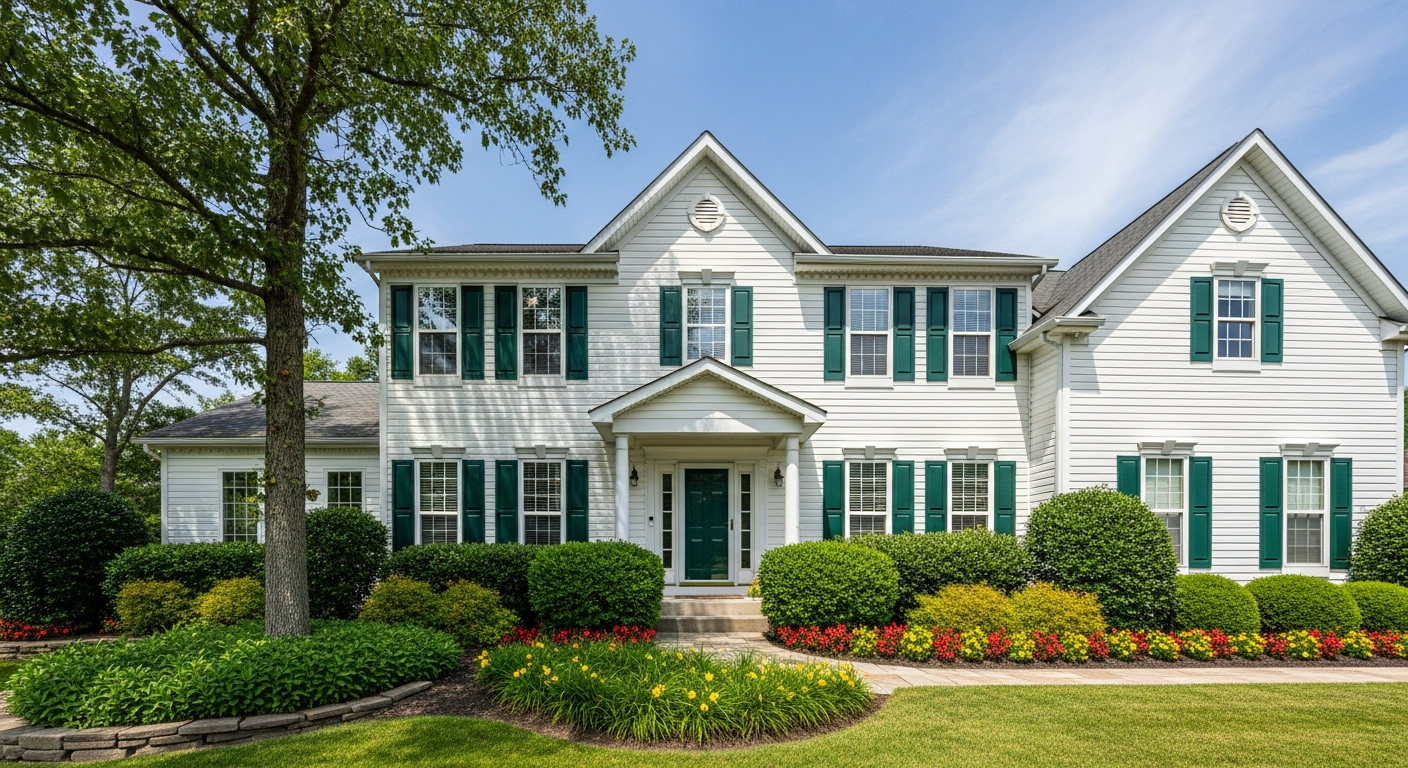
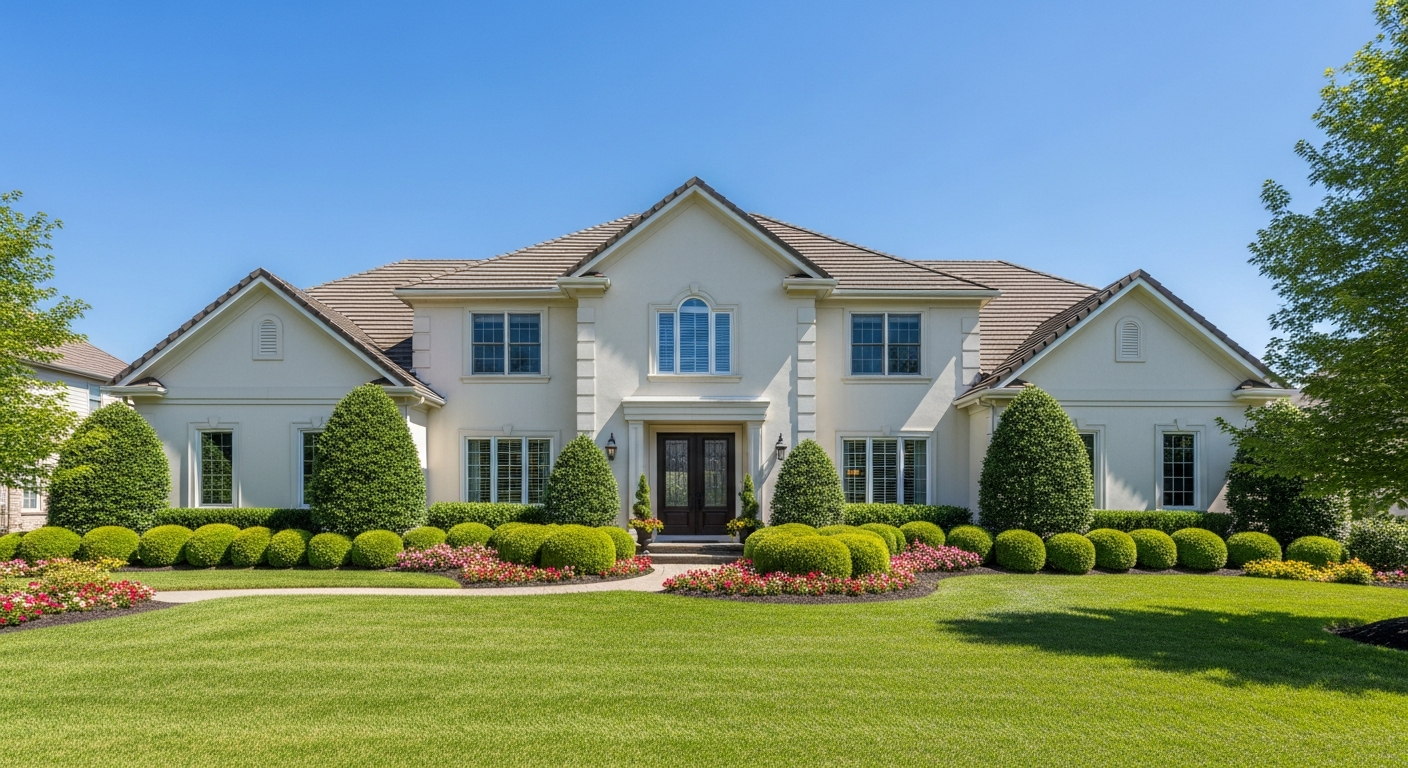
Drag the slider to compare Stucco vs Siding siding appearance
Stucco vs Siding: Side-by-Side Comparison
Here is the full comparison before the details. This table weighs stucco against siding — represented here by vinyl, the most common siding material — across every factor that matters for your home's exterior:
| Factor | Siding (Vinyl) | Stucco |
|---|---|---|
| Material | Polyvinyl chloride (PVC) | Cement, lime, sand — or EIFS foam |
| Cost per square foot installed | $3.50–$7.00 | $6.00–$9.00 |
| 2,000 sqft home cost | $7,000–$14,000 | $12,000–$18,000 |
| Lifespan | 20–40 years | 50–80 years |
| Maintenance | Rinse occasionally; no painting | Repaint ~8–10 yrs; patch cracks |
| Installation | DIY-friendly; fast | Skilled plasterers; multi-day cure |
| Finish | Panelized — visible seams | Seamless, monolithic |
| Fire rating | Combustible | Non-combustible (Class A) |
| Cracking | No — flexes with temperature | Prone to cracks (settling, seismic) |
| Best climate | Most climates; tolerates moisture | Hot & dry; poor in wet/freeze-thaw |
| R-value (insulation) | ~0.61 std; ~2–3 insulated | ~0.20; EIFS adds foam insulation |
| Curb appeal | Good — many profiles | Premium — seamless, Mediterranean look |
| Resale ROI | ~75–80% | ~60–80% (region-dependent) |
| Best for | Budget, low maintenance, any climate | Hot-dry regions, longevity, seamless look |
Source: Portland Cement Association, NAHB Construction Cost Reports, Remodeling Magazine Cost vs. Value Report, BLS.
Cost Comparison: Stucco vs Siding
On upfront cost, siding wins. Vinyl siding costs $3.50–$7.00 per square foot installed, putting a typical 2,000-square-foot home at $7,000–$14,000. Stucco runs $6.00–$9.00 per square foot — $12,000–$18,000 for the same home — because it is a labor-intensive, multi-coat system that requires skilled plasterers rather than a panel a crew can hang in a day. So the cost of stucco vs siding favors siding at installation by roughly 30–70%.
But upfront cost is only part of the math. Stucco lasts far longer than vinyl siding — 50–80 years against 20–40 — so over a long enough horizon, the durability narrows the gap. The other factor that doesn't show up in a per-square-foot quote is climate: stucco priced for a dry Southwest home behaves very differently on a rainy Midwest one, where repair costs can climb. We'll put real numbers to the 30-year picture next.
| Home Size | Siding (Vinyl) Installed | Stucco Installed |
|---|---|---|
| 1,500 sqft | $5,250–$10,500 | $9,000–$13,500 |
| 2,000 sqft | $7,000–$14,000 | $12,000–$18,000 |
| 2,500 sqft | $8,750–$17,500 | $15,000–$22,500 |
| 3,000 sqft | $10,500–$21,000 | $18,000–$27,000 |
Installed cost only. Use our vinyl siding cost and stucco cost calculators for state-specific pricing.
Cost of Ownership: Stucco vs Siding Over 30 Years
Here is what each exterior actually costs to own over 30 years on a typical 2,000-square-foot home, including stucco's repaint cycle and crack repairs and siding's near-zero upkeep:
| Line Item (2,000 sqft home) | Siding (Vinyl) | Stucco |
|---|---|---|
| Upfront installation | ~$10,000 | ~$15,000 |
| Repainting / refinishing over 30 years | $0 | ~$6,000 |
| Crack & patch repair | ~$500 | ~$3,000 |
| 30-year total spend | ~$10,500 | ~$24,000 |
| Lifespan | 20–40 years | 50–80 years |
| Resale recovery on install | ~75–80% | ~60–80% |
Illustrative example using national-average costs. Actual figures vary by climate, stucco system, and home complexity.
Over 30 years, siding is the cheaper exterior — roughly $10,500 against $24,000 for stucco. But the lifespan row is where stucco makes its case: at year 30, vinyl siding is near the end of its life and facing replacement, while stucco is barely middle-aged. Stretch the horizon to 50 or 60 years and a homeowner may re-side once or twice over the same stucco wall, which closes much of the gap. That makes stucco a forever-home, right-climate investment — not the budget pick. If you'll move in ten years or live where stucco struggles, siding is the smarter money.
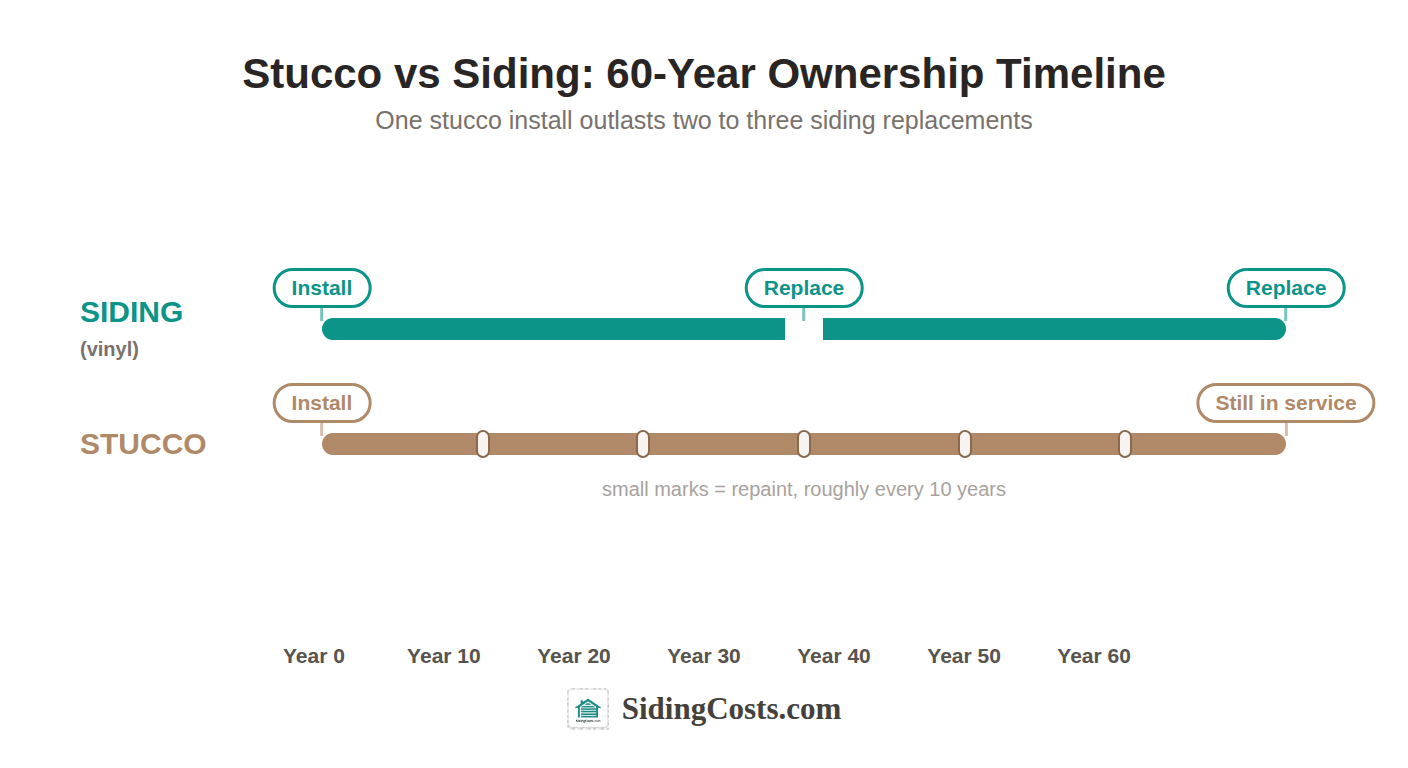
One stucco install outlasts two to three siding replacements over a 60-year horizon.
What Is Stucco? Traditional Hard-Coat and EIFS
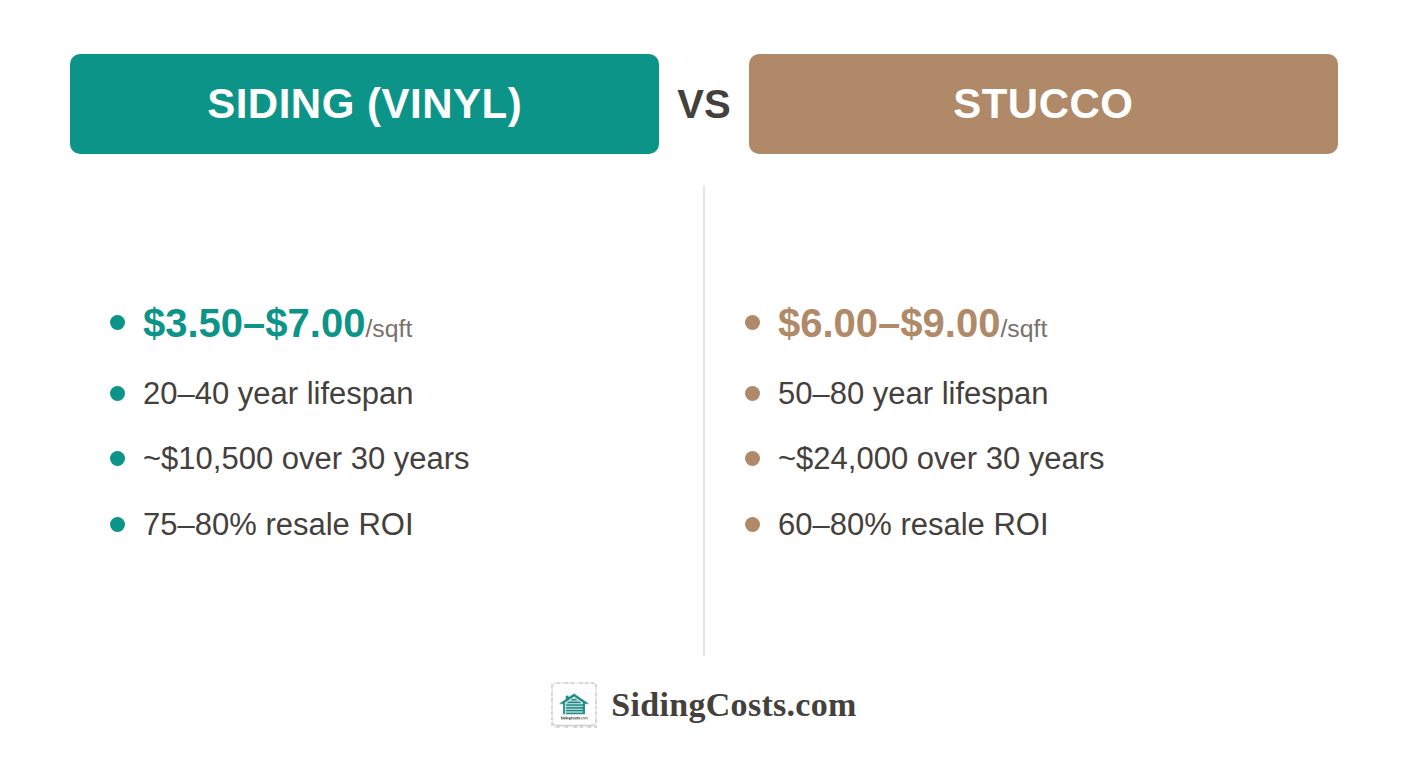
Stucco vs siding: key cost and performance metrics compared. Source: Portland Cement Association, NAHB, Remodeling Magazine.
Stucco is a cement-based plaster applied wet and troweled onto a wall, where it hardens into a single seamless, monolithic surface. Traditional hard-coat stucco is a three-coat system — a scratch coat, brown coat, and finish coat of Portland cement, lime, sand, and water over metal lath. The result is fire-resistant, long-lived, and available in unlimited colors and textures, from smooth modern stucco to heavy Mediterranean and Spanish finishes that give the material its signature curb appeal.
There is also a synthetic alternative: EIFS (Exterior Insulation and Finish System), sometimes called synthetic stucco. EIFS bonds a layer of foam insulation to the wall under an acrylic finish coat, adding real building insulation that traditional cement stucco lacks. It looks similar but performs differently — EIFS improves energy efficiency, though early systems had moisture-trapping problems that gave it a mixed reputation. Whichever system, stucco demands skilled plasterers and a multi-day cure, which is a large part of why it costs more than siding to install.
What Is Siding? Vinyl, Fiber Cement, and Wood
"Siding" is a category of panelized cladding hung on a wall, not a single material. Vinyl siding — made from polyvinyl chloride (PVC) — is by far the most common: inexpensive, nearly maintenance-free, and available in a wide range of colors and profiles. It won't rot, never needs painting, and a homeowner can even install it as a DIY project.
Beyond vinyl, the most popular siding options are fiber cement siding (brands like James Hardie — durable, non-combustible, and the closest siding rival to stucco on longevity), wood siding for natural character, and stone or brick veneer siding for a masonry look. Fiber cement siding in particular is worth a look for anyone drawn to stucco's durability but living outside a stucco-friendly climate — it offers cement-based toughness in a panel that handles moisture far better.
Stucco Pros and Cons
Stucco Pros
- ✓ 50–80 year lifespan — one of the longest available
- ✓ Seamless, monolithic finish with no panel seams
- ✓ Fire resistant — non-combustible cement
- ✓ Unlimited colors and textures
- ✓ Excellent in hot, dry climates
- ✓ Low routine maintenance between repaints
- ✓ Premium curb appeal for Mediterranean/Spanish styles
Stucco Cons
- ✗ Higher upfront cost than vinyl siding
- ✗ Prone to cracking from settling and seismic movement
- ✗ Poor choice in wet or freeze-thaw climates
- ✗ Expensive to repair once it cracks
- ✗ Requires skilled plasterers — not DIY
- ✗ Multi-day installation with cure time
- ✗ Needs repainting every 8–10 years
Siding Pros and Cons
Siding Pros
- ✓ Lower upfront cost — especially vinyl
- ✓ Very low maintenance — no repainting for vinyl
- ✓ Performs in nearly any climate, wet or dry
- ✓ Flexes with temperature — won't crack like stucco
- ✓ Faster, DIY-friendly installation
- ✓ Easy, inexpensive to repair a damaged panel
- ✓ Many materials — vinyl, fiber cement, wood, veneer
Siding Cons
- ✗ Shorter lifespan than stucco (vinyl 20–40 yrs)
- ✗ Visible seams rather than a seamless finish
- ✗ Vinyl is combustible and can warp in heat
- ✗ Water can get behind it if flashing fails
- ✗ Lower-end vinyl can look like plastic up close
- ✗ Premium siding (fiber cement) costs more than stucco
Durability and Lifespan: How Long Each Option Lasts
On durability, stucco is the heavyweight — in the right climate. Traditional hard-coat stucco lasts 50–80 years and routinely passes 100 on historic homes in dry regions, versus 20–40 years for vinyl siding. A stucco wall is hard, monolithic, and fire-resistant. Its weakness is rigidity: because it doesn't flex, stucco cracks under settling, seismic movement, and freeze-thaw cycles, and once water finds those cracks, it can become trapped behind the wall and cause hidden damage. Siding takes the opposite approach — vinyl flexes with temperature and sheds water, so it never cracks, though it is more susceptible to surface water issues and physical impact than a cement wall.
That difference reshapes the lifespan comparison by region. In a dry climate, stucco's longevity is real and largely maintenance-light. In a wet or freezing one, the same stucco may need crack and moisture repair often enough that its practical lifespan drops toward siding's — while costing far more to fix. Fiber cement siding is the durability middle ground: cement-based toughness and a 30–50 year life in a panel that tolerates moisture stucco can't.
Climate Considerations: The Most Overlooked Cost Factor
Climate is the single most important — and most overlooked — factor in the stucco vs siding decision. Stucco thrives in hot, dry, sunny regions: the Southwest, much of California, Texas, Arizona, and parts of Florida, where heat and low rainfall let it last for generations. It handles intense sun and high heat better than vinyl, which can warp or fade under extreme conditions. In wildfire-prone parts of California and the West, stucco's non-combustible cement skin is a real safety advantage — it won't ignite or melt the way vinyl can, and many fire-hardening building codes now favor exactly this kind of exterior.
Siding is the safer pick everywhere wet or cold. In humid, rainy, or freeze-thaw climates, stucco's tendency to crack and trap moisture turns into recurring repair bills and potential structural damage, while vinyl and fiber cement shed water and flex through temperature swings. Hail and high wind are a closer call — stucco resists wind well but can chip under hail, while vinyl can crack in a hard hailstrike but is cheap to patch. The honest rule of thumb: match stucco to dry heat and siding to moisture, and a lot of the rest of this comparison takes care of itself.
Energy Efficiency: Which One Performs Better?
Standard materials are close, but the systems pull apart. Traditional stucco has a low R-value of about 0.20, though its thermal mass helps buffer indoor temperatures in hot climates. EIFS (synthetic stucco) adds a foam insulation layer and clearly outperforms standard vinyl on energy efficiency. Insulated vinyl siding, meanwhile, reaches R-2 to R-3 and beats traditional stucco. So for pure energy performance, the insulated versions of each — EIFS stucco or insulated siding — lead, while plain vinyl and plain stucco land in a similar middle. Climate still shapes the payback: thermal mass matters more in the desert than in a mild coastal zone.
Maintenance, Repair, and Resale Value
Between repaints, stucco is fairly low-maintenance — there are no panels to replace and nothing to rot. The cost shows up in two places: a repaint every 8–10 years and stucco repair when cracks appear, which is labor-intensive and can be expensive to blend seamlessly. Siding flips that: vinyl asks for almost nothing and a damaged panel is cheap to swap, though it won't last as long overall.
Resale value is regional. In stucco markets, a clean seamless stucco exterior is what buyers expect and supports the sale; outside those regions, cracked or patched stucco can raise red flags about moisture. Vinyl and fiber cement siding recover roughly 75–80% of their cost per Remodeling Magazine's Cost vs. Value Report, while stucco lands around 60–80% depending heavily on climate fit and condition. For a fuller view of how your exterior affects value, see our house siding cost guide.
Can You Put Siding Over Stucco?
Yes — and it's a common move for homeowners tired of the crack-and-repair loop. Vinyl or fiber cement siding can be installed over stucco by attaching furring strips to create a flat, level nailing surface, often with rigid foam added for insulation along the way. It avoids the mess and cost of tearing the stucco off and can modernize a dated exterior. The reverse — applying stucco over existing siding — isn't recommended; the siding has to come off first so the stucco has a proper substrate. If you're weighing a switch, our siding replacement cost guide covers what to expect.
Choosing Between Stucco and Siding
Choose stucco if you live in a hot, dry climate, you're staying in the home long-term, and you want a seamless, fire-resistant exterior with a multi-decade lifespan — and you accept a higher upfront cost and the occasional crack repair. Stucco rewards the right region and the long horizon, and its Mediterranean and Spanish looks are hard to replicate in siding. Picture a Spanish-revival home in Santa Fe or Scottsdale: the seamless, hand-troweled stucco isn't a coating on that house, it's the architecture — a look siding can imitate but never quite become.
Choose siding if upfront cost and low maintenance matter, you live anywhere wet or cold, or you may move within a decade or two. Vinyl siding is the affordable, adaptable default that performs in almost any climate. And if you want stucco-grade durability without a stucco-friendly climate, fiber cement siding or engineered wood siding are the middle-ground options worth pricing. As with any exterior, get three or more quotes — pricing for the same material varies 20–40% within a single market.
Frequently Asked Questions
Is stucco better than siding?+
Is stucco cheaper than siding?+
How long does stucco last vs siding?+
Which is better for energy efficiency?+
What are the disadvantages of stucco?+
Can you install siding over existing stucco?+
Which holds up better by climate?+
Does stucco or siding add more resale value?+
Compare Costs for Your Home
Use our free calculators for state-specific estimates on both exteriors.
Related Siding Comparisons
Vinyl vs Fiber Cement
The stucco-tough siding option
Vinyl vs Hardie Board
Budget vs premium fiber cement
Brick vs Siding
Masonry vs panel cladding
Stucco Siding Cost
Traditional and EIFS pricing
Data Sources & Methodology
📊Bureau of Labor Statistics (BLS) — Occupational Employment and Wage Statistics (OEWS), OCC 47-2211 & 47-2031
🏠National Association of Home Builders (NAHB) — Construction Cost Survey, 2024-2026 data
🏭James Hardie Corp — Published product pricing and warranty specifications
🌲Western Red Cedar Bureau — Cedar siding grade pricing and specifications
🔧Active contractor pricing surveys — 50-state coverage, updated quarterly
All cost data is updated quarterly. Last comprehensive update: Q1 2026.
Home Exterior Cost Analyst
Sarah Brennan
Sarah Brennan is a construction cost researcher specializing in exterior building envelope systems. With 14 years of experience in residential construction estimating, she transitioned from managing siding installation crews to independent cost research. Her data draws from the Bureau of Labor Statistics, NAHB construction cost reports, manufacturer pricing databases, and active contractor surveys across all 50 states. Sarah is a Certified Construction Specifier (CCS) through the Construction Specifications Institute.
Important Disclaimer
The cost estimates provided by SidingCosts.com are for informational and educational purposes only. Actual siding costs vary based on local labor rates, material availability, site conditions, contractor pricing, and other factors not captured by this calculator. These estimates should not be used as a substitute for professional contractor quotes. SidingCosts.com is not a licensed contractor and does not provide installation services. Always obtain at least 3 written quotes from licensed, insured contractors in your area before starting any siding project. Data sources include the Bureau of Labor Statistics (BLS), National Association of Home Builders (NAHB), and manufacturer published pricing. Last updated: 2026.