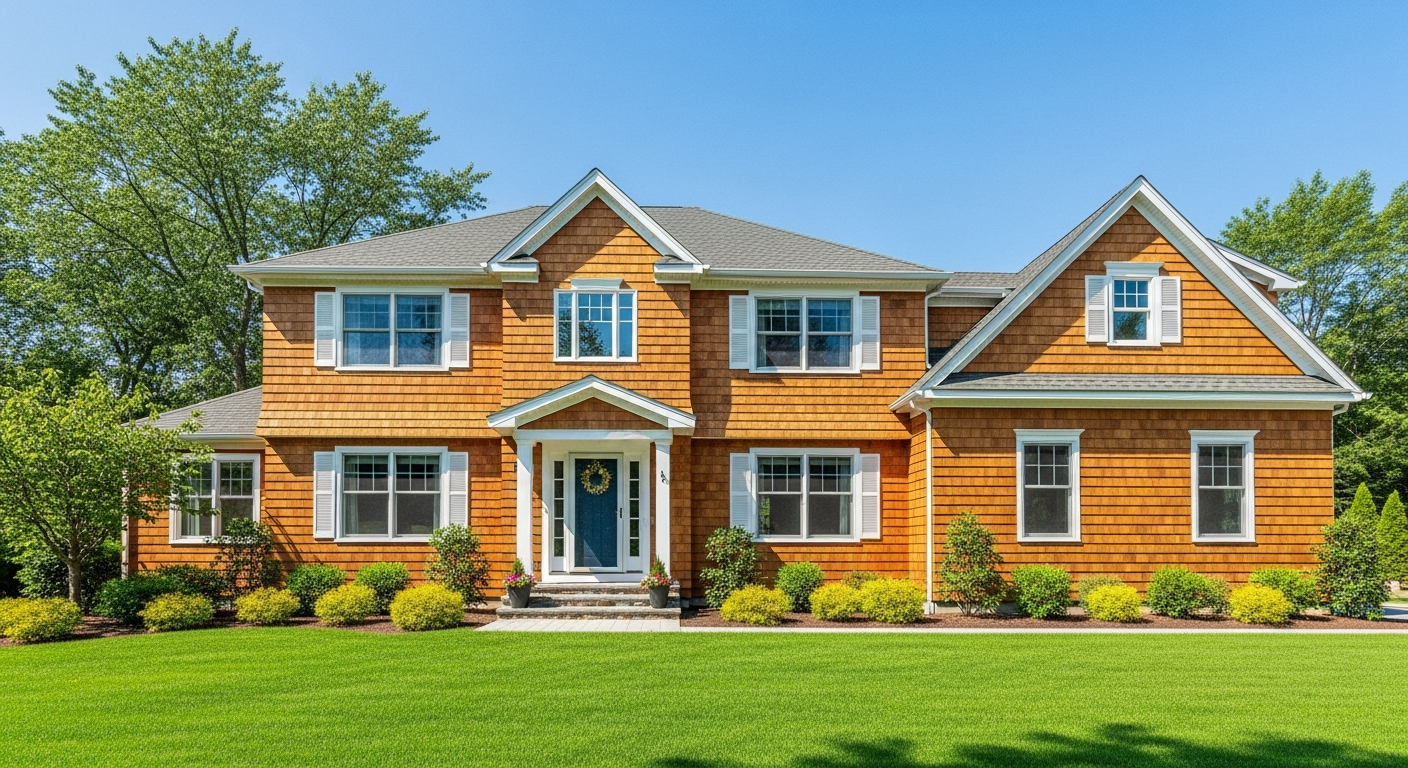
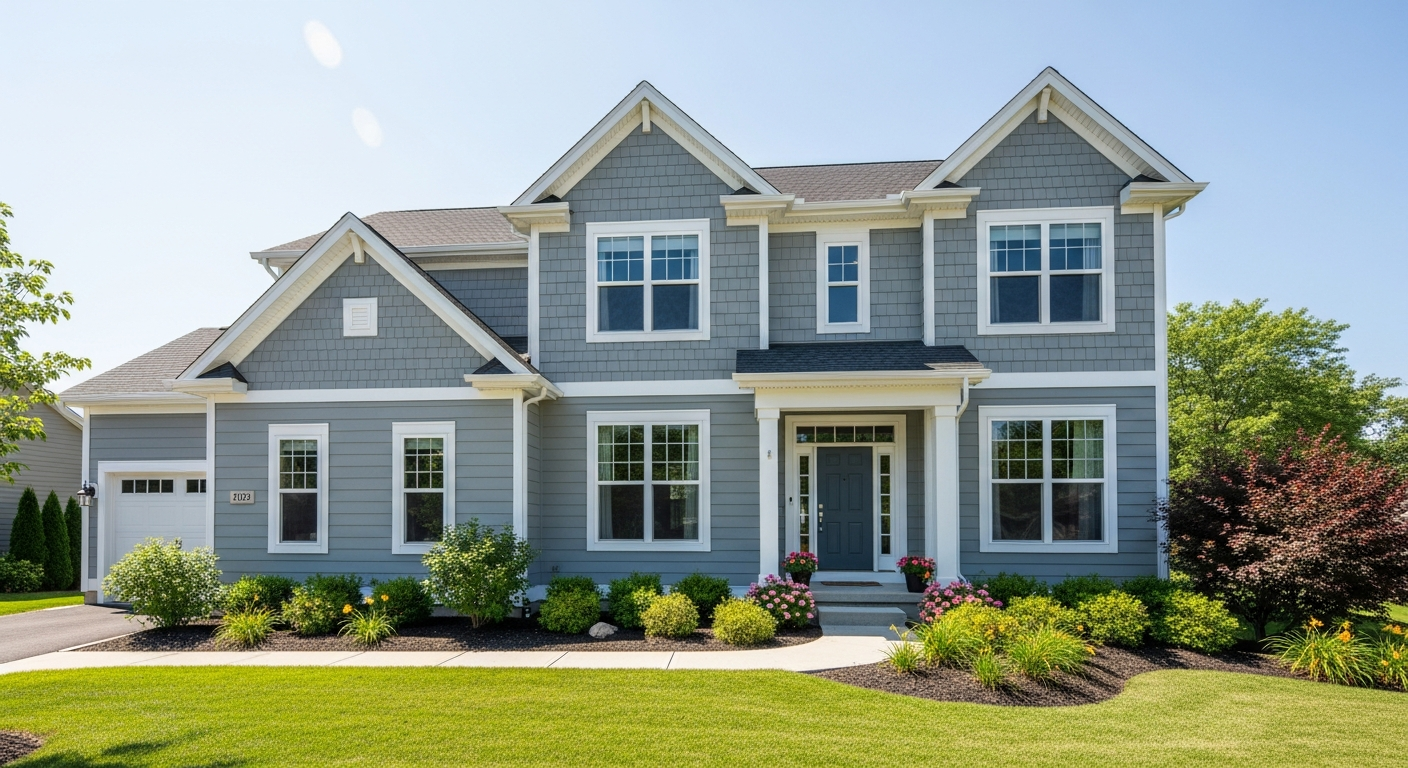
Drag the slider to compare Hardie Board vs Cedar siding appearance
Cedar Siding vs Hardie Board: Side-by-Side Comparison
Before we dig into the details, here's the full comparison table. This covers every factor that matters when choosing between cedar siding and Hardie board fiber cement siding for your home:
| Factor | Hardie Board (Fiber Cement) | Cedar Siding (Natural Wood) |
|---|---|---|
| Material | Cement, cellulose fiber, sand | Western red cedar (natural wood) |
| Cost per sqft installed | $6.50–$14.00 | $6.00–$14.00 |
| 2,000 sqft home cost | $13,000–$28,000 | $12,000–$28,000 |
| Lifespan | 30–50 years | 15–40 years |
| Warranty | 30-year non-prorated | Varies by manufacturer |
| Fire rating | Class A (non-combustible) | Not rated (combustible) |
| Termite resistance | Immune — cement-based | Natural resistance (thujaplicins) |
| R-value (insulation) | ~0.50 per inch | ~1.35 per inch |
| Maintenance | Repaint every 10–15 years | Stain/seal every 3–5 years |
| 30-year maint. cost | ~$5,000–$8,000 | ~$18,000–$36,000 |
| Weight | ~2.5 lbs/sqft (heavy) | ~1.0 lbs/sqft (light) |
| Woodpecker risk | Low — too hard | Moderate — natural wood attracts them |
| Appearance | Pressed wood grain texture | Natural grain — every board unique |
| ROI at resale | 70–80% | 50–75% |
| Environmental | Not biodegradable, landfill waste | Renewable, biodegradable |
| Best for | Durability, fire zones, low maintenance | Natural beauty, insulation, dry climates |
Source: James Hardie Industries, Cedar Bureau, NAHB, Remodeling Magazine Cost vs. Value Report.
Cost Comparison: Hardie Board vs Cedar Siding
The upfront cost of Hardie board and cedar siding is remarkably similar. James Hardie fiber cement siding runs $6.50–$14.00 per square foot installed, while cedar clapboard siding costs $6.00–$12.00/sqft and cedar shingles run $7.00–$14.00/sqft. For a typical 2,000-square-foot home, both materials land in the $12,000–$28,000 range. The cost difference between cedar and Hardie board at the point of installation is often less than $2,000 — close enough that the decision should be driven by performance and maintenance rather than upfront price.
Where the cost comparison shifts dramatically is over time. Cedar requires staining or sealing every 3–5 years at $1.50–$3.00 per square foot per cycle — that's $3,000–$6,000 for a 2,000 sqft home every time. Over 30 years, that adds $18,000–$36,000 in maintenance costs. Hardie board needs repainting every 10–15 years, costing roughly $5,000–$8,000 over the same period. The ColorPlus factory finish from James Hardie extends the repaint interval even further. On a total cost of ownership basis, Hardie board is significantly cheaper than cedar despite the similar upfront price.
| Home Size | Hardie Board (Installed) | Cedar Clapboard (Installed) |
|---|---|---|
| 1,500 sqft | $9,750–$21,000 | $9,000–$18,000 |
| 2,000 sqft | $13,000–$28,000 | $12,000–$24,000 |
| 2,500 sqft | $16,250–$35,000 | $15,000–$30,000 |
| 3,000 sqft | $19,500–$42,000 | $18,000–$36,000 |
Installed cost only — does not include ongoing maintenance. See our Hardie board cost and cedar siding cost calculators for state-specific pricing.
Hardie Board Siding: What Makes It Different
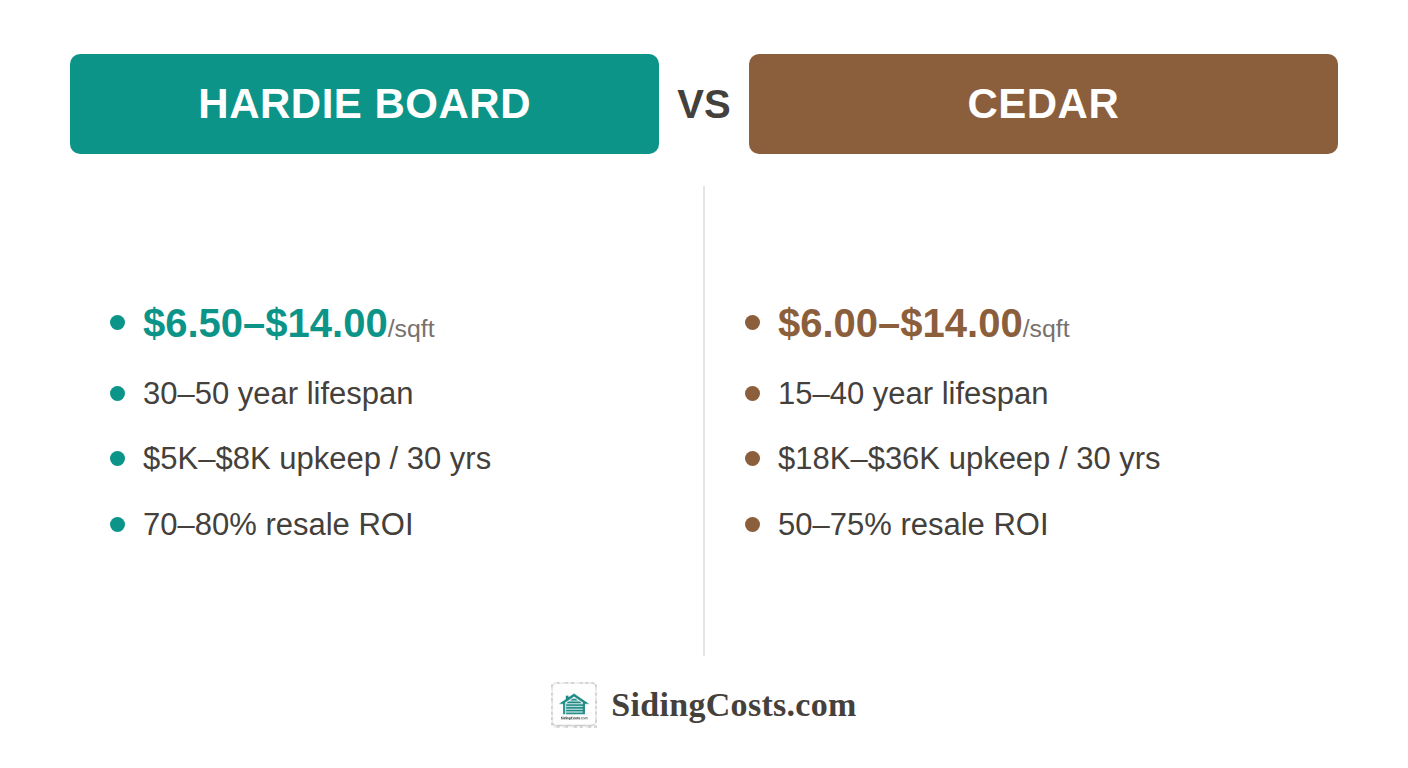
Hardie board vs cedar siding: key cost and performance metrics compared. Source: James Hardie Industries, Cedar Bureau, NAHB.
James Hardie fiber cement siding is made from a mixture of Portland cement, cellulose fiber, and sand. The cement matrix makes it non-combustible (Class A fire rating), completely immune to termites and rot, and dimensionally stable — it won't warp, expand, or contract with temperature changes the way wood does. James Hardie Industries holds roughly 90% of the North American fiber cement market, making "Hardie board" essentially synonymous with fiber cement siding.
The material comes in several profiles: HardiePlank lap siding, HardieShingle panels, HardiePanel vertical siding, and artisan-style options for custom applications. The Select Cedarmill texture is James Hardie's most popular finish — a pressed wood grain pattern designed to mimic the look of natural cedar. From 10 feet away, it's convincing. Up close, it lacks the depth and natural variation of real cedar wood siding.
Hardie board requires minimal maintenance compared to natural wood. The ColorPlus factory-applied finish carries a 15-year warranty and typically lasts 10–15 years before repainting is needed. The substrate itself is warranted for 30 years, non-prorated. For homeowners who want premium curb appeal without the ongoing maintenance burden of real wood, Hardie board is the industry standard choice.
Cedar Siding Overview: Natural Beauty and Insulation
Cedar siding — specifically western red cedar — is the traditional premium siding choice for homes where natural beauty matters most. The wood contains thujaplicins, naturally occurring compounds that resist fungal decay and pest damage without chemical treatment. Cedar's cellular structure creates air pockets that give it the highest R-value of any common siding wood (approximately 1.35 per inch), making it a natural insulator that can reduce heating costs in older homes.
Cedar comes in multiple profiles: clapboard (beveled lap), shingles, shakes, and board and batten. Each profile has a distinctive look that fiber cement siding cannot fully replicate. The tight, straight grain of western red cedar accepts stains beautifully, and the natural color range — from honey gold to reddish brown — means every board is unique. Left unfinished, cedar weathers to a silver-gray patina that many homeowners in the Pacific Northwest and New England find equally attractive.
The trade-off is maintenance. Cedar is vulnerable to moisture damage in humid climates, susceptible to woodpecker activity, and requires consistent staining or sealing every 3–5 years. In wet regions like Portland, Oregon or Michigan, cedar can deteriorate faster than its rated lifespan if maintenance lapses. Cedar is also combustible — it carries no fire rating, which matters in fire-prone areas of California, Colorado, and Oregon where building codes may require non-combustible exterior siding materials.
Hardie Board Siding Pros and Cons
Hardie Board Pros
- ✓ Class A fire rating — non-combustible
- ✓ 30–50 year lifespan with 30-year warranty
- ✓ Immune to termites, rot, and pest damage
- ✓ Low maintenance — repaint every 10–15 years
- ✓ Dimensionally stable — no warping or splitting
- ✓ Higher and more predictable resale ROI (70–80%)
- ✓ Paintable any color — unlimited design flexibility
- ✓ Resists weather damage including hail and wind
Hardie Board Cons
- ✗ Heavy (2.5 lbs/sqft) — higher installation labor cost
- ✗ Cutting produces silica dust (safety equipment required)
- ✗ Can crack if improperly installed or house settles
- ✗ Lower R-value than cedar (~0.50 vs ~1.35 per inch)
- ✗ Pressed texture cannot match natural wood grain depth
- ✗ Not biodegradable — ends up in landfill
- ✗ Absorbs moisture if paint seal fails (freeze-thaw risk)
Cedar Siding Pros and Cons
Cedar Pros
- ✓ Unmatched natural beauty — every board unique
- ✓ Highest R-value of any siding wood (~1.35/inch)
- ✓ Natural resistance to decay and insects (thujaplicins)
- ✓ Lightweight — easier and faster to install
- ✓ Can be refinished repeatedly — never needs replacing
- ✓ Renewable and biodegradable — environmentally friendly
- ✓ Multiple natural profiles (shingles, shakes, clapboard)
Cedar Cons
- ✗ Requires staining/sealing every 3–5 years
- ✗ 30-year maintenance cost: $18,000–$36,000
- ✗ Combustible — no fire rating without treatment
- ✗ Vulnerable to moisture damage in humid climates
- ✗ Susceptible to woodpecker and insect activity
- ✗ Can rot, split, or warp without proper maintenance
- ✗ Less predictable resale ROI (50–75%)
Durability and Maintenance: Fiber Cement vs Cedar
This is where the comparison gets decisive. Hardie board requires minimal upkeep — a repaint every 10–15 years is the primary maintenance task, and the ColorPlus factory finish pushes that interval even further. The material itself is immune to the biological threats that shorten natural wood siding lifespans: termites cannot eat it, fungi cannot colonize it, and woodpeckers find it too hard to damage. James Hardie siding resists weather damage from hail, wind, and UV exposure better than any wood siding product.
Cedar siding requires active, ongoing maintenance. The staining cycle every 3–5 years is non-negotiable in most climates — miss a cycle and moisture penetrates the wood, accelerating rot and reducing the siding's lifespan. Cedar is also prone to cupping, splitting, and warping as it ages, particularly on south-facing walls with heavy sun exposure. In humid regions, cedar can develop mold and mildew between the siding and the house wrap if the installation doesn't allow adequate drainage and ventilation.
For homeowners who enjoy maintaining their home and want to be hands-on, cedar's maintenance needs are manageable. For those who prefer a "set it and forget it" exterior, Hardie board is the clear winner. The maintenance cost difference over 30 years — roughly $10,000–$28,000 — is the single biggest factor that separates these two materials on a total cost basis.
Fire Resistance and Safety
Hardie board carries a Class A fire rating — the highest available. The cement-based material is non-combustible and will not ignite, spread flame, or produce toxic smoke. This matters enormously in fire-prone regions. Many communities in California, Colorado, Oregon, and other Western states have adopted wildland-urban interface building codes that require non-combustible siding materials on new construction and major renovations.
Cedar is combustible. It can be treated with fire retardants to achieve a Class B or C rating, but treated cedar costs more and the treatment needs periodic renewal. In areas with fire advisory design regulations, choosing cedar siding may also increase your home insurance premiums — some insurers offer discounts for non-combustible exterior cladding that can offset a portion of Hardie board's installed cost.
Cost and Return on Investment
According to Remodeling Magazine's Cost vs. Value Report, fiber cement siding (including James Hardie) typically recovers 70–80% of its installed cost at resale. Cedar siding ROI is less predictable — ranging from 50–75% depending on the condition and maintenance history of the siding at the time of sale. A well-maintained cedar exterior in excellent condition can match Hardie board's ROI. A cedar exterior that's overdue for staining and showing weathering will significantly underperform.
The investment calculation also includes maintenance costs. A homeowner who spends $25,000 on Hardie board and $6,000 on maintenance over 30 years has a total investment of $31,000. The same home with $22,000 in cedar siding and $27,000 in maintenance has a total of $49,000. That $18,000 difference buys a lot of other home improvements.
Which Siding Is Best for Your Home?
Choose Hardie board if you want maximum durability with minimal ongoing effort. It's the right siding for fire-prone areas, humid climates, homes in neighborhoods with strict HOA requirements, and homeowners who don't want to think about exterior siding maintenance for decades. It's also the better choice for investment properties and homes you plan to sell within 10–15 years — the predictable ROI and low maintenance make it more attractive to buyers.
Choose cedar siding if natural beauty is your top priority and you're willing to invest in regular maintenance. Cedar is ideal for homes in dry climates (Pacific Northwest, Mountain West), craftsman and historic architectural styles, and homeowners who view staining their siding as part of caring for their home rather than a chore. Cedar also makes sense if the home already has cedar siding and you're replacing sections — matching existing natural wood with fiber cement is difficult.
If you want the wood look at a lower price point with less maintenance than either option, consider LP SmartSide engineered wood siding — it costs $4.50–$9.00/sqft installed and splits the difference between Hardie's durability and cedar's wood-grain appearance.
Frequently Asked Questions
Is Hardie Board better than cedar siding?+
Is Hardie Board more expensive than cedar?+
Which siding lasts longer: cedar or Hardie Board?+
Does Hardie Board require painting?+
Which siding is better for humid climates?+
Can Hardie Board look like real wood?+
What is the downside of Hardie Board?+
Compare Costs for Your Home
Use our free calculators for state-specific estimates on both materials.
Related Siding Comparisons
Vinyl vs Hardie Board
Budget vs premium comparison
Vinyl vs Wood Siding
Vinyl vs natural wood
LP SmartSide Cost
Engineered wood middle ground
Fiber Cement Cost
All fiber cement brands
Data Sources & Methodology
📊Bureau of Labor Statistics (BLS) — Occupational Employment and Wage Statistics (OEWS), OCC 47-2211 & 47-2031
🏠National Association of Home Builders (NAHB) — Construction Cost Survey, 2024-2026 data
🏭James Hardie Corp — Published product pricing and warranty specifications
🌲Western Red Cedar Bureau — Cedar siding grade pricing and specifications
🔧Active contractor pricing surveys — 50-state coverage, updated quarterly
All cost data is updated quarterly. Last comprehensive update: Q1 2026.
Home Exterior Cost Analyst
Sarah Brennan
Sarah Brennan is a construction cost researcher specializing in exterior building envelope systems. With 14 years of experience in residential construction estimating, she transitioned from managing siding installation crews to independent cost research. Her data draws from the Bureau of Labor Statistics, NAHB construction cost reports, manufacturer pricing databases, and active contractor surveys across all 50 states. Sarah is a Certified Construction Specifier (CCS) through the Construction Specifications Institute.
Important Disclaimer
The cost estimates provided by SidingCosts.com are for informational and educational purposes only. Actual siding costs vary based on local labor rates, material availability, site conditions, contractor pricing, and other factors not captured by this calculator. These estimates should not be used as a substitute for professional contractor quotes. SidingCosts.com is not a licensed contractor and does not provide installation services. Always obtain at least 3 written quotes from licensed, insured contractors in your area before starting any siding project. Data sources include the Bureau of Labor Statistics (BLS), National Association of Home Builders (NAHB), and manufacturer published pricing. Last updated: 2026.