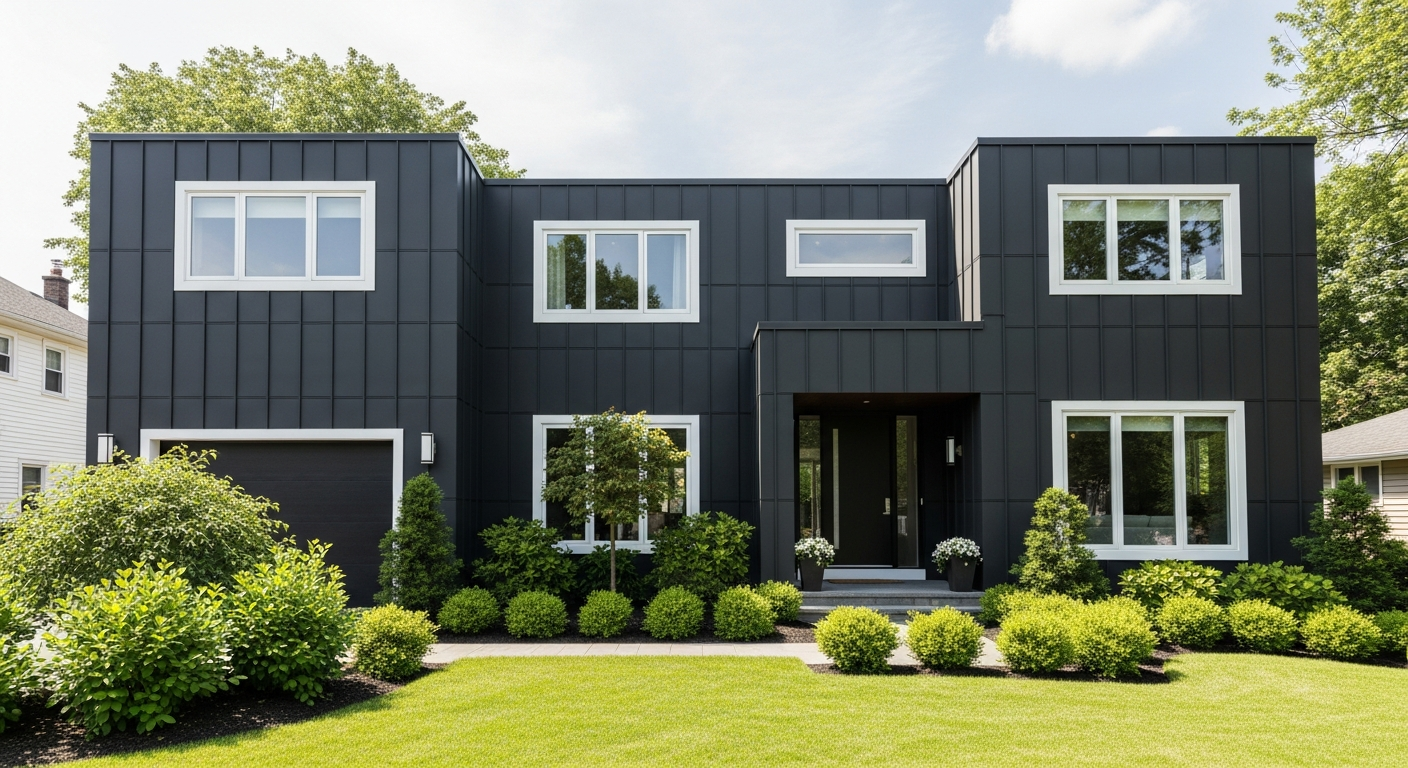
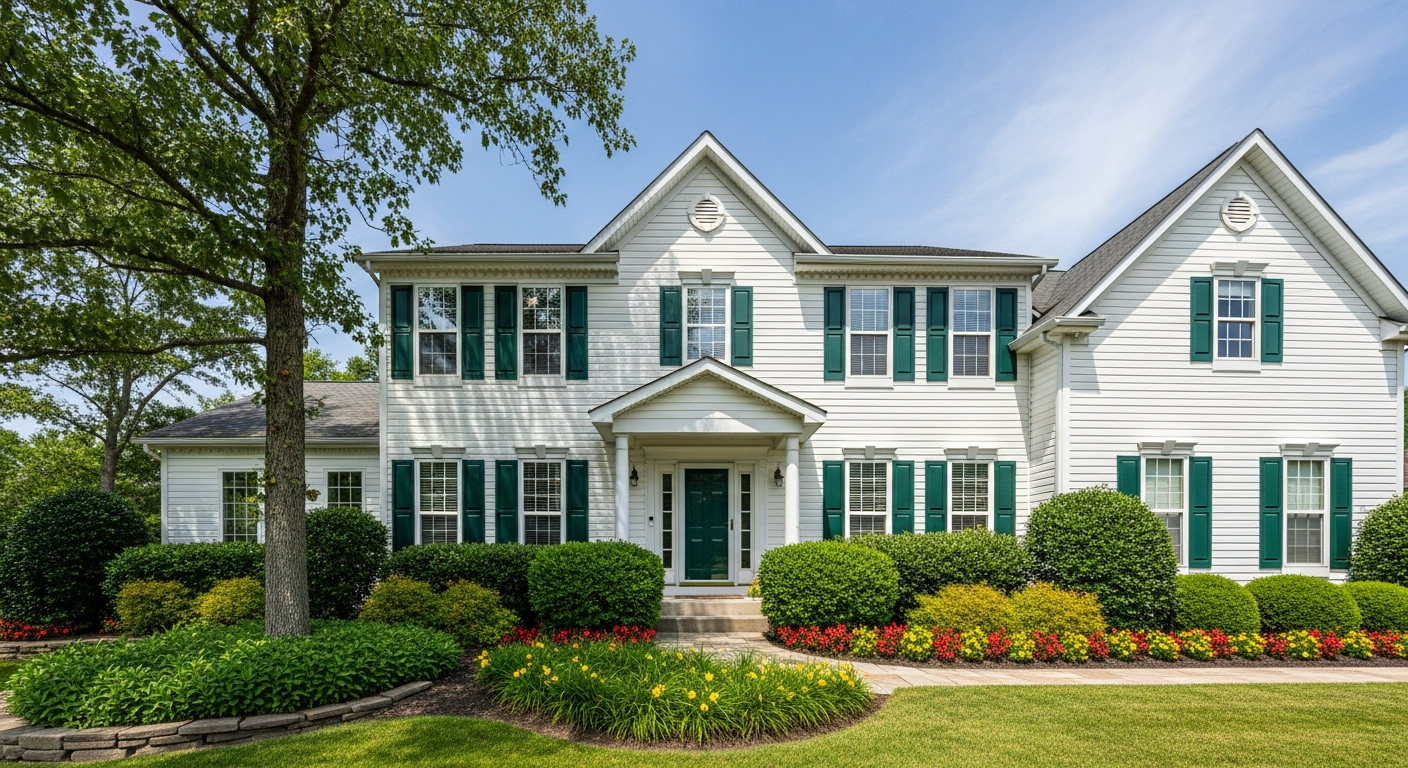
Drag the slider to compare Vinyl vs Steel siding appearance
Vinyl Siding vs Metal Siding: Quick Comparison Table
| Factor | Vinyl Siding | Aluminum Siding | Steel Siding |
|---|---|---|---|
| Cost/sqft installed | $3.50–$7.00 | $3.50–$7.00 | $5.00–$12.00 |
| 2,000 sqft home | $7,000–$14,000 | $7,000–$14,000 | $10,000–$24,000 |
| Lifespan | 20–40 years | 30–50 years | 40–60 years |
| Fire resistance | Melts / deforms | Non-combustible | Non-combustible |
| Hail resistance | Cracks and shatters | Dents easily | Highly resistant |
| Maintenance | Virtually none | Occasional washing | Occasional washing |
| Color options | Hundreds of colors | Limited palette | Limited palette |
| R-value (insulation) | 0.61 (standard) | ~0.00 (bare) | ~0.00 (bare) |
| Dent resistance | Flexible — bounces back | Low — dents permanently | High — resists most impacts |
| Rust risk | None | None (aluminum) | Possible if coating scratched |
| Environmental | PVC — not recyclable curbside | 100% recyclable | 100% recyclable |
| Noise (rain) | Quiet | Moderate | Moderate |
| Weight | ~0.5 lbs/sqft | ~0.7 lbs/sqft | ~1.5 lbs/sqft |
| Best for | Budget, color variety | Coastal, budget metal | Hail zones, max durability |
Source: NAHB, Metal Building Manufacturers Association, vinyl siding manufacturer data.
Metal Siding vs Vinyl Siding: Cost Comparison
The cost difference between vinyl and metal siding depends on which type of metal you're comparing. Aluminum siding costs about the same as vinyl — $3.50–$7.00 per square foot installed. Steel siding is the premium option at $5.00–$12.00/sqft, making it 40–70% more expensive than vinyl on an upfront basis.
| Home Size | Vinyl | Aluminum | Steel |
|---|---|---|---|
| 1,000 sqft | $3,500–$7,000 | $3,500–$7,000 | $5,000–$12,000 |
| 1,500 sqft | $5,250–$10,500 | $5,250–$10,500 | $7,500–$18,000 |
| 2,000 sqft | $7,000–$14,000 | $7,000–$14,000 | $10,000–$24,000 |
| 2,500 sqft | $8,750–$17,500 | $8,750–$17,500 | $12,500–$30,000 |
| 3,000 sqft | $10,500–$21,000 | $10,500–$21,000 | $15,000–$36,000 |
Installed pricing including materials, labor, and trim. Use our siding cost calculator for state-specific pricing.
But the cost difference narrows significantly when you account for lifespan. Vinyl siding lasts 20–40 years. Steel siding lasts 40–60 years — potentially twice as long. A homeowner who installs vinyl twice over 50 years pays $14,000–$28,000. A homeowner who installs steel once pays $10,000–$24,000. When you factor in the disruption and labor cost of a second siding project, steel often comes out ahead on a per-year basis.
What Are Vinyl and Metal Siding Made Of?
Vinyl siding is made from polyvinyl chloride (PVC) — the same plastic used in pipes, window frames, and medical tubing. Modern vinyl siding is extruded in two layers: a weather-resistant capstock on the outside and a structural substrate on the inside. The PVC formulation includes UV stabilizers, impact modifiers, and pigments that run through the entire thickness (unlike paint, which sits on the surface). This is why vinyl siding doesn't need painting — the color is integral to the material.
Metal siding comes in two primary types. Aluminum siding is lightweight, corrosion-proof, and affordable. Steel siding is heavier, stronger, and more dent-resistant. Both are factory-coated with baked-on paint finishes that provide color and corrosion protection. Steel siding uses galvanized (zinc-coated) or Galvalume (aluminum-zinc alloy coated) base metal for rust resistance. Seamless steel siding — custom-formed on-site by contractors like ABC Seamless — eliminates panel joints for a cleaner appearance and better weather sealing.
The Pros and Cons of Vinyl Siding
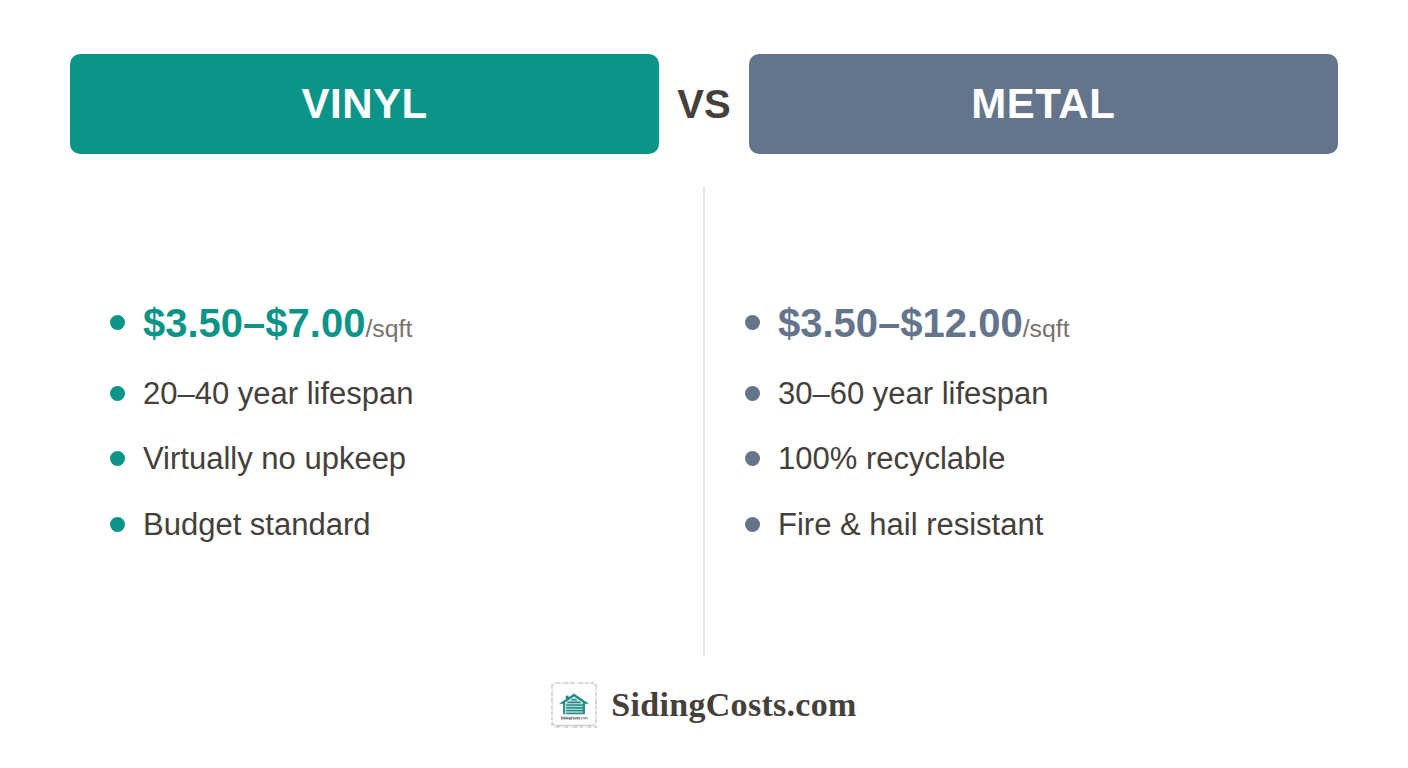
Vinyl vs aluminum vs steel siding: key cost and performance metrics compared. Source: NAHB, manufacturer data.
Vinyl Pros
- ✓ Most affordable siding option ($3.50–$7.00/sqft)
- ✓ Virtually zero maintenance — no painting or staining
- ✓ Hundreds of color and profile options available
- ✓ Lightweight and easy to install — lower labor costs
- ✓ Flexible — resists cracking from minor impacts
- ✓ Color runs through the material — scratches don't show
- ✓ Better insulation than bare metal (R-value 0.61)
- ✓ Can be installed over existing siding in some cases
Vinyl Cons
- ✗ Shorter lifespan (20–40 years)
- ✗ Melts and deforms in fire — not fire-rated
- ✗ Shatters in extreme cold from impact
- ✗ Cracks from large hail — costly damage in storm zones
- ✗ Fades over time, especially dark colors
- ✗ Can warp or buckle from heat on south-facing walls
- ✗ PVC is not easily recyclable — landfill waste
- ✗ Lower perceived quality — common, not premium
The Pros and Cons of Steel Siding
Steel Siding Pros
- ✓ Extremely durable — 40–60+ year lifespan
- ✓ Non-combustible — fire-resistant for wildfire zones
- ✓ Hail-resistant — steel won't crack like vinyl
- ✓ 100% recyclable — the most sustainable siding option
- ✓ Termite-proof and rot-proof
- ✓ Won't warp, buckle, or sag from heat
- ✓ High wind resistance — performs well in storms
- ✓ May reduce insurance premiums in hail/fire zones
Steel Siding Cons
- ✗ Higher upfront cost ($5.00–$12.00/sqft installed)
- ✗ Can rust if factory coating is scratched or damaged
- ✗ Noisy during rain and hail without insulation backing
- ✗ Poor insulation — virtually no R-value without foam
- ✗ Limited color and profile options vs vinyl
- ✗ Can cause condensation in humid climates
- ✗ Scratches expose bare metal — touch-up paint needed
- ✗ Heavier — may require structural considerations
What Are the Pros and Cons of Aluminum Siding?
Aluminum sits between vinyl and steel on most performance metrics. It costs the same as vinyl ($3.50–$7.00/sqft), never rusts (unlike steel), and lasts 30–50 years. The biggest disadvantage is dent susceptibility — aluminum dents permanently from hail, ladders, and even baseballs. In hail-prone regions of the Midwest and Great Plains, aluminum siding may need panel replacement after severe storms, while steel would survive undamaged.
Aluminum is the best metal siding choice for coastal areas where salt spray accelerates corrosion. Steel siding — even galvanized — can develop rust at cut edges and fastener points in salt-air environments. Aluminum is completely immune to corrosion regardless of climate or proximity to saltwater.
Durability: Metal vs Vinyl in Extreme Weather
Weather performance is where metal siding separates itself from vinyl. Steel siding handles hail that would shatter vinyl panels. Both metal types are non-combustible — critical in wildfire-prone areas where vinyl siding melts and can allow flame to reach the wall sheathing. In high-wind events, properly installed steel siding withstands winds above 130 mph; vinyl siding may be rated for 110 mph but can unlatch and blow off in gusting conditions.
Vinyl does have one weather advantage: it performs better in freeze-thaw cycles than aluminum because it's flexible. Aluminum siding can develop fatigue cracks over decades of thermal expansion and contraction in climates with extreme temperature swings. Steel siding is heavy enough to be dimensionally stable through temperature cycles.
Energy Efficiency: Insulated Vinyl vs Metal Panels
Standard vinyl siding has an R-value of about 0.61. Insulated vinyl siding — with a foam backing fused to the panel — bumps that to R-2 to R-5, a meaningful improvement for older homes. Metal siding has virtually no R-value on its own. Insulated metal siding panels with foam backing are available but less common and add $1.00–$2.50/sqft to the cost. For energy efficiency, insulated vinyl siding is the better choice unless you're specifically selecting insulated metal panels. In either case, wall cavity insulation matters far more than siding R-value for overall home energy performance.
The Verdict: When to Choose Vinyl vs Metal Siding
Choose vinyl siding if you want the lowest upfront cost, maximum color selection, and virtually zero maintenance. Vinyl is the right siding for budget-conscious homeowners in moderate climates without severe hail, wildfire, or extreme wind exposure. It's also the practical choice for investment properties and homes you plan to sell within 10–15 years.
Choose steel siding if you live in a hail-prone area (Midwest, Great Plains, Texas), a wildfire zone (California, Colorado, Pacific Northwest), or want siding that lasts the lifetime of your home. Steel's durability, fire resistance, and recyclability make it the most sustainable long-term siding choice. The higher upfront cost pays for itself through a 40–60 year lifespan and potential insurance savings.
Choose aluminum siding if you want metal siding at vinyl pricing, especially in coastal areas where corrosion resistance matters. Just be aware of the dent risk — aluminum is not the right choice for hail-prone regions. Consider our aluminum vs vinyl comparison for more detail on that matchup.
Frequently Asked Questions
Which is better, vinyl siding or metal siding?+
Is metal siding more expensive than vinyl?+
How long does vinyl siding last vs metal siding?+
What are the disadvantages of metal siding?+
Is metal siding worth the extra cost in 2026?+
Which siding is better for resale value?+
What siding should I avoid?+
Compare Costs for Your Home
Use our free calculators for state-specific estimates on vinyl and metal siding.
Related Siding Comparisons
Aluminum vs Vinyl
Budget metal vs vinyl
Vinyl vs Hardie Board
Budget vs premium fiber cement
Steel Siding Cost
Premium metal option
Compare All Materials
Side-by-side calculator
Data Sources & Methodology
📊Bureau of Labor Statistics (BLS) — Occupational Employment and Wage Statistics (OEWS), OCC 47-2211 & 47-2031
🏠National Association of Home Builders (NAHB) — Construction Cost Survey, 2024-2026 data
🏭James Hardie Corp — Published product pricing and warranty specifications
🌲Western Red Cedar Bureau — Cedar siding grade pricing and specifications
🔧Active contractor pricing surveys — 50-state coverage, updated quarterly
All cost data is updated quarterly. Last comprehensive update: Q1 2026.
Home Exterior Cost Analyst
Sarah Brennan
Sarah Brennan is a construction cost researcher specializing in exterior building envelope systems. With 14 years of experience in residential construction estimating, she transitioned from managing siding installation crews to independent cost research. Her data draws from the Bureau of Labor Statistics, NAHB construction cost reports, manufacturer pricing databases, and active contractor surveys across all 50 states. Sarah is a Certified Construction Specifier (CCS) through the Construction Specifications Institute.
Important Disclaimer
The cost estimates provided by SidingCosts.com are for informational and educational purposes only. Actual siding costs vary based on local labor rates, material availability, site conditions, contractor pricing, and other factors not captured by this calculator. These estimates should not be used as a substitute for professional contractor quotes. SidingCosts.com is not a licensed contractor and does not provide installation services. Always obtain at least 3 written quotes from licensed, insured contractors in your area before starting any siding project. Data sources include the Bureau of Labor Statistics (BLS), National Association of Home Builders (NAHB), and manufacturer published pricing. Last updated: 2026.